Modeling and Machine Learning
Cedalion supports two complementary analysis strategies:
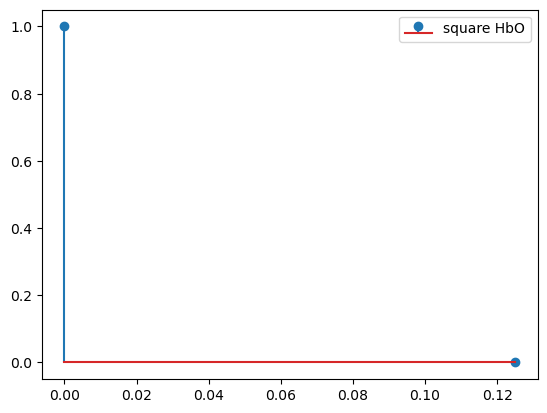
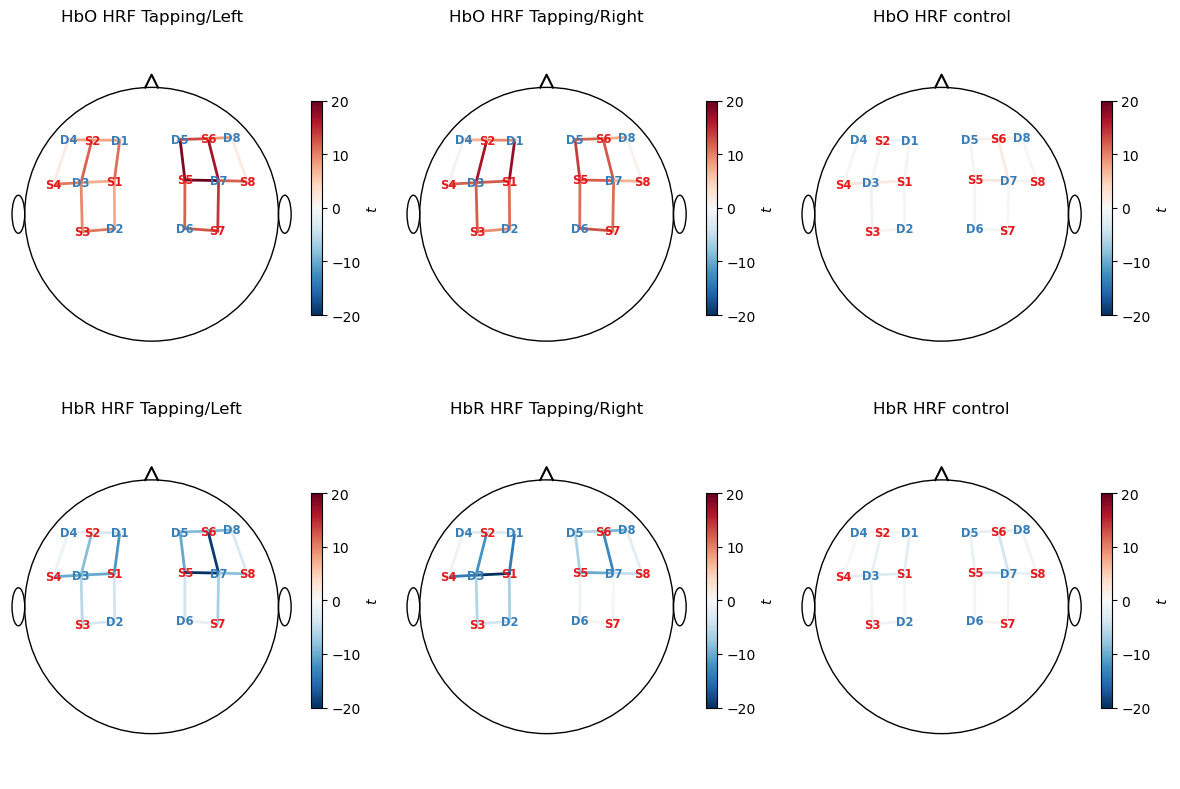
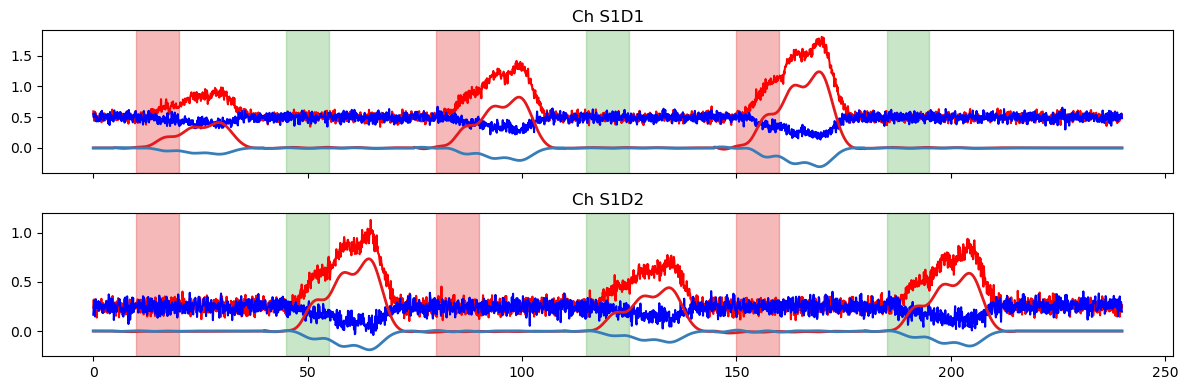
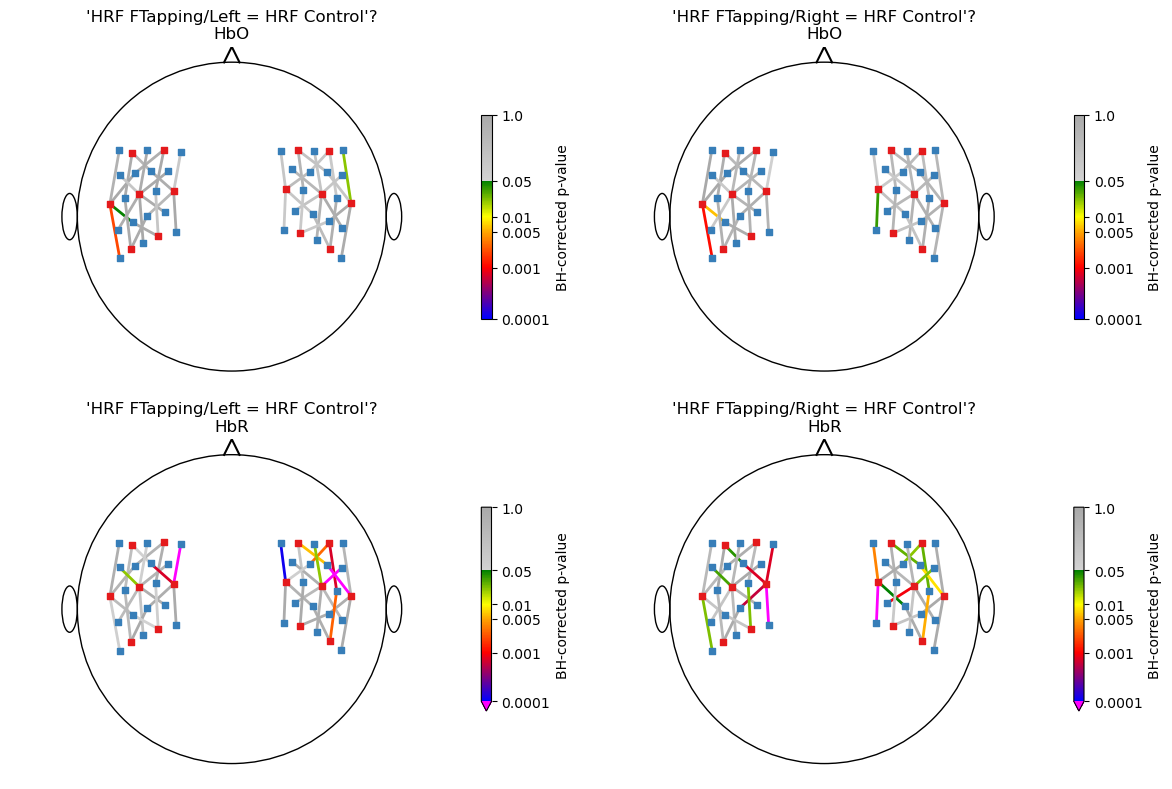
Model-driven analysis uses the General Linear Model (GLM) to estimate haemodynamic response functions (HRFs) from known stimulus timings. A design matrix is constructed from convolutions of stimulus boxcar functions with HRF basis functions (Gamma, GaussianKernels, DiracDelta). The GLM is fitted per-channel, and beta coefficients quantify the amplitude of the response to each condition. This approach is well-suited when the experimental design is block- or event-based and stimuli are accurately recorded.
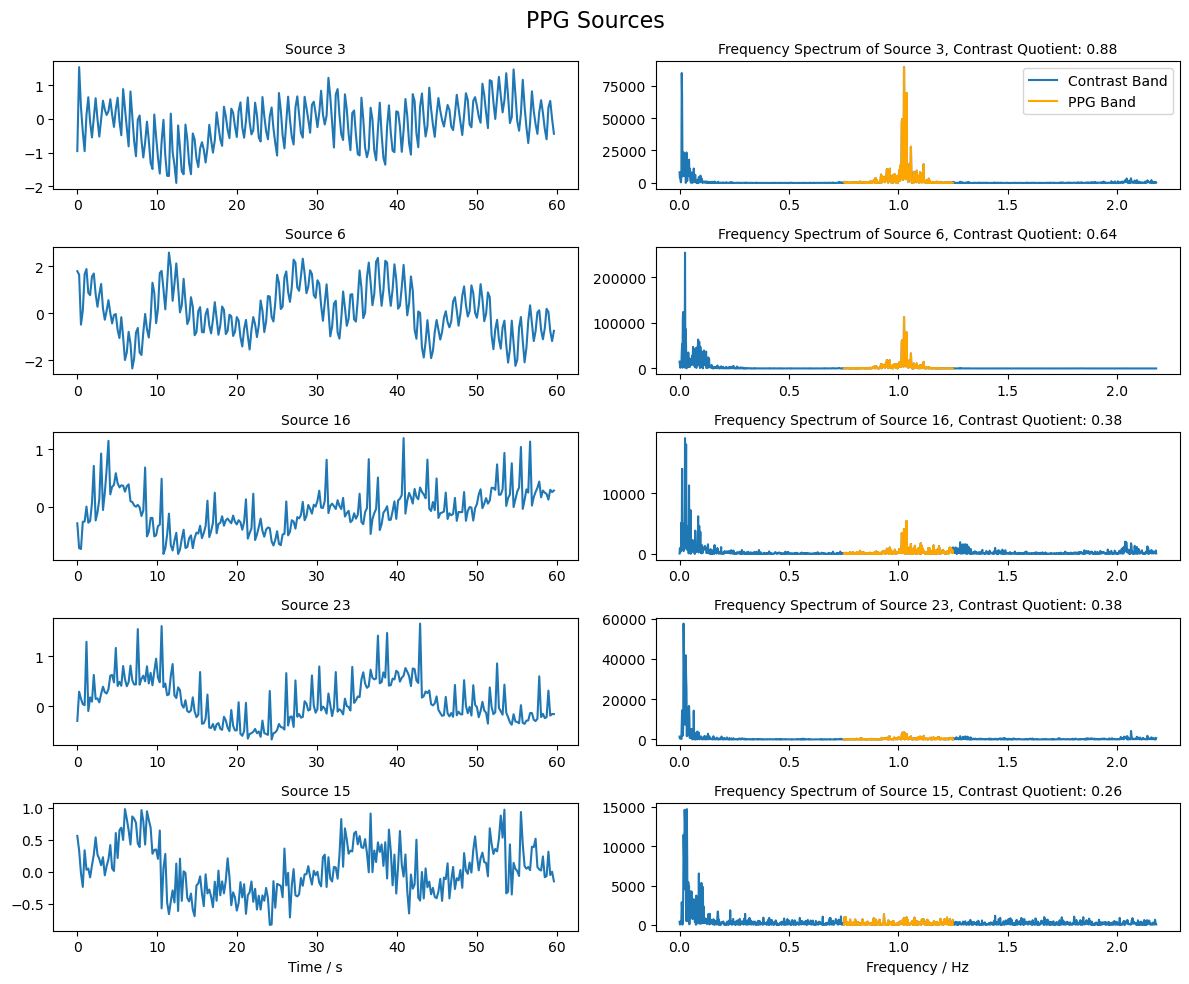
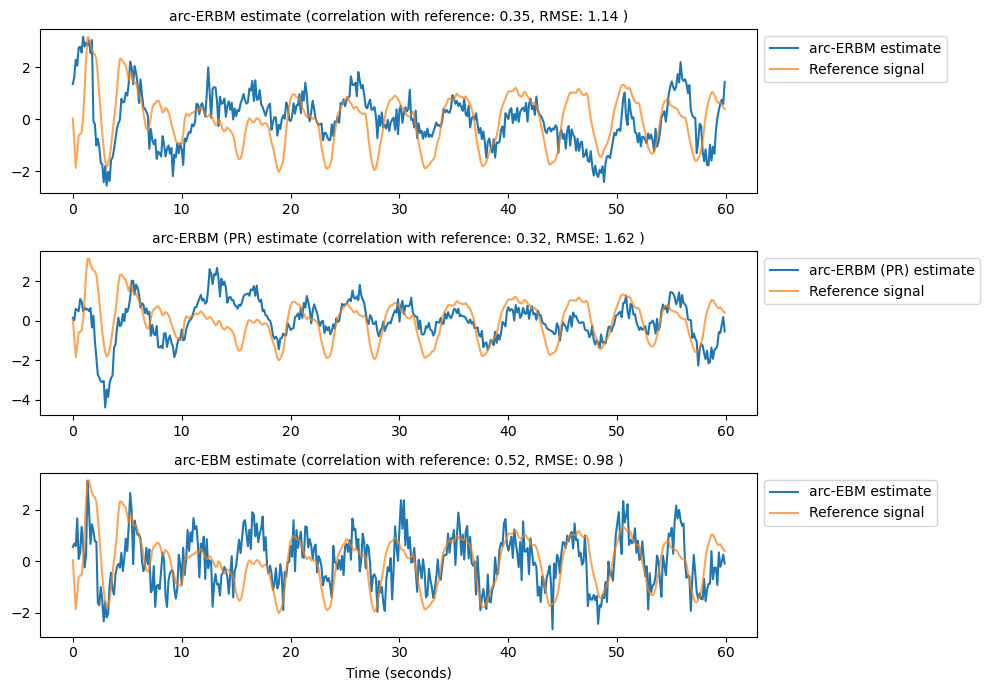
Data-driven analysis uses decomposition methods (ICA, CCA, SPoC, mSPoC) to identify shared structure across channels or modalities without relying on a stimulus model. This is particularly useful for naturalistic recordings, EEG–fNIRS co-recordings, or when the neural signal of interest cannot be described by a simple HRF.
Both approaches integrate with scikit-learn: Cedalion DataArrays behave as numpy
arrays to sklearn estimators, while the mlutils module provides cross-validation
utilities designed for the temporal structure of fNIRS data.
Models
Tools for describing fNIRS data with general linear models. |
|
Decomposition Methods
Multimodal signal decomposition methods. |
ML Utilities
Feature extraction from epoched fNIRS data for use with scikit-learn pipelines. |
Examples